
Cosmic Timeline Explorer
Navigate 13.8 billion years of cosmic history—from the Big Bang to today and beyond
The Story of Everything
The universe has a history—a rich, complex story stretching from the first fraction of a second after the Big Bang to the emergence of galaxies, stars, planets, and life. In 13.8 billion years, the cosmos transformed from a hot, dense plasma into the vast, structured universe we observe today, containing hundreds of billions of galaxies, each with hundreds of billions of stars.
Our Cosmic Timeline Explorer lets you navigate this incredible history. Jump to any epoch, understand the key events that shaped our universe, and place human history in its cosmic context. Discover how the atoms in your body were forged in ancient stars, and glimpse the universe’s distant future.
Cosmic Chronology
The NASA WMAP timeline provides scientific foundations for cosmic chronology. Our Cosmic Calendar Converter compresses this history into a single year for intuitive understanding.
Cosmic Timeline Explorer
Navigate through the history of the universe:
🌌 Your Life in the Universe
Discover what was happening in space when you were born and throughout your lifetime
Explore major epochs from the Big Bang through galaxy formation, stellar nucleosynthesis, and the emergence of life.
The First Second
More happened in the first second after the Big Bang than in the following 13.8 billion years:
- 10⁻⁴³ seconds (Planck time): The earliest moment physics can describe. Quantum gravity dominated. Our Planck to Cosmic Time Calculator explores these scales
- 10⁻³⁶ seconds: Cosmic inflation—space expanded exponentially, smoothing the universe and creating the seeds of structure
- 10⁻³² seconds: Inflation ends; the universe reheats, creating matter and antimatter
- 10⁻⁶ seconds: Quarks combine into protons and neutrons as the universe cools
- 1 second: Neutrinos decouple; they still permeate the universe today
The First 400,000 Years
Big Bang Nucleosynthesis (3-20 minutes)
In a brief window, conditions allowed nuclear fusion throughout the universe. About 75% hydrogen, 25% helium, and traces of lithium and deuterium formed—the primordial composition we still observe in ancient stars. All heavier elements came later from stellar fusion. Explore stellar fusion with our Fusion Energy Calculator.
Recombination and the CMB (380,000 years)
When the universe cooled to about 3,000 Kelvin, electrons combined with nuclei to form neutral atoms. Suddenly, photons could travel freely—the universe became transparent. These photons, now cooled to 2.7 Kelvin, form the cosmic microwave background (CMB)—the oldest light we can see.
The Dark Ages and First Light
Cosmic Dark Ages (380,000 – 200 million years)
After recombination, the universe entered the “dark ages”—no stars had yet formed. Only the fading glow of the CMB and the slow gravitational collapse of matter in the darkness. Dark matter halos began forming, attracting normal matter into the first proto-galactic structures.
First Stars (~200 million years)
The first stars—Population III—ignited from pristine hydrogen and helium. These were giants, perhaps 100-1000 solar masses, burning hot and bright but dying quickly as supernovae. They created the first heavy elements, seeding future generations of stars. Our Star Life Expectancy Calculator shows how stellar mass determines lifespan.
Reionization (~200 million – 1 billion years)
Ultraviolet light from first-generation stars and quasars gradually ionized the neutral hydrogen between galaxies, making the universe transparent again. This “Epoch of Reionization” transformed the cosmic web. The James Webb Space Telescope is now observing this era directly.
Galaxy Formation and Cosmic Noon
Galaxy assembly (1-5 billion years): Small galaxies merged into larger ones. The Milky Way likely formed from dozens of smaller galaxies over billions of years. Explore galactic distances with our Cosmic Distance Ladder.
Cosmic Noon (~2-4 billion years): Star formation peaked. Galaxies were actively making stars at rates 10x higher than today. This was the universe’s most productive era—most stars that exist today formed during this period.
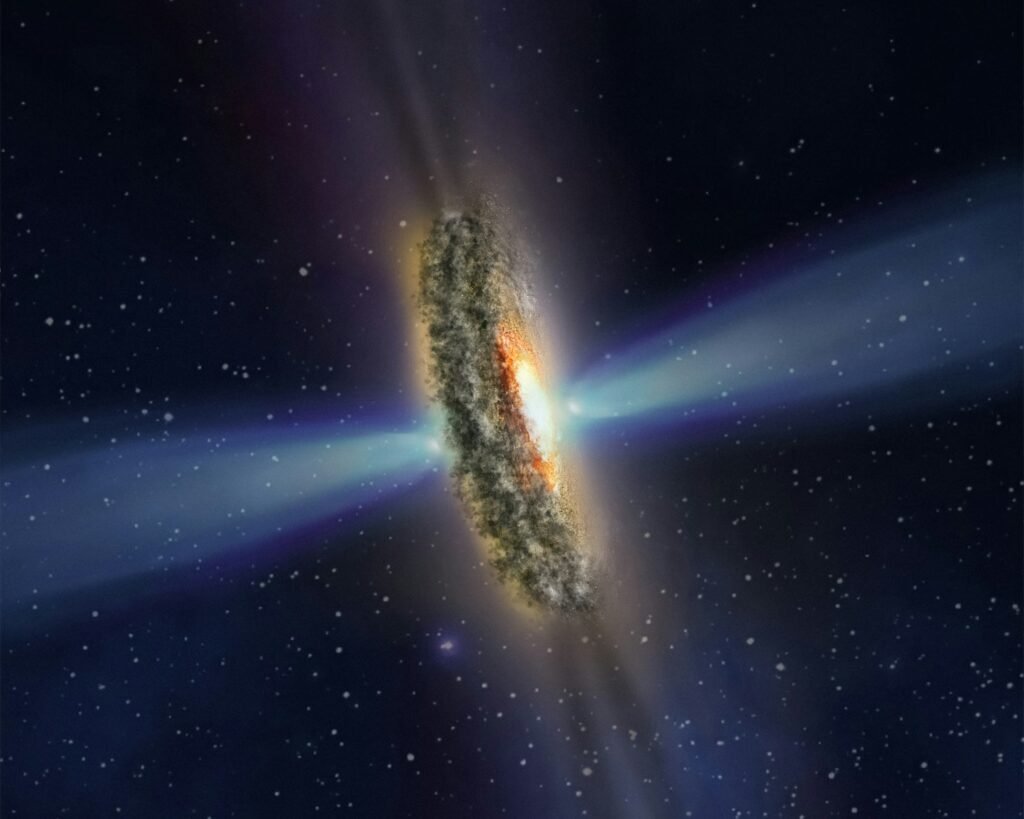
Supermassive black holes: Black holes at galaxy centers grew rapidly through accretion and mergers. Quasars—the brightest objects in the universe—mark active supermassive black holes. Explore black hole physics with our Hawking Radiation Timer.
Our Solar System and Beyond
- 9.2 billion years: Our Sun and solar system form from the debris of earlier stellar generations
- 9.7 billion years: Earth forms; moon-forming impact occurs soon after
- 10 billion years: First evidence of life on Earth (stromatolites)
- 11.5 billion years: Great Oxygenation Event transforms Earth’s atmosphere
- 13.2 billion years: Cambrian explosion—complex life proliferates
- 13.77 billion years: Dinosaurs go extinct
- 13.799999 billion years: Humans emerge; all recorded history fits in the last 5,000 years
Calculate your age on other worlds with our Planetary Age Calculator. Explore Earth’s deep history with our Deep Time Visualizer.
Frequently Asked Questions
How do we know the universe’s age?
Multiple independent methods converge on 13.8 billion years: cosmic microwave background observations, stellar ages in globular clusters, and expansion rate measurements. The precision is remarkable—we know the universe’s age to within about 1%.
What came before the Big Bang?
Science doesn’t know—and it may be a meaningless question. If time itself began with the Big Bang, “before” has no meaning. Some theories suggest our universe emerged from quantum fluctuations, colliding membranes, or cyclic processes, but these remain speculative.
Are we late arrivals in cosmic history?
We’re actually quite early. The universe is 13.8 billion years old, but the stelliferous era will last about 100 trillion years. We’ve appeared in roughly the first 0.01% of the time when life as we know it is possible. See our Heat Death Countdown for the full timeline.
How much of cosmic history can we observe?
We can see back to recombination (380,000 years after the Big Bang) through the CMB. The James Webb Space Telescope observes galaxies from when the universe was just 2-3% of its current age. Gravitational waves might eventually let us “hear” even earlier epochs.
Explore More Cosmic History
The cosmic timeline connects to every aspect of astronomy and physics. Continue exploring:
- Redshift Calculator – Measure the universe’s expansion
- Space Mission Timeline – Human space exploration history
- Interstellar Travel Calculator – Journey times across the cosmos
- Gravitational Wave Detector – Hear ripples from merging black holes
- Dark Matter Calculator – The invisible scaffolding of structure
The cosmic timeline reveals our place in an ancient, evolving universe—from quantum fluctuations to the emergence of beings who can ask where they came from. We are the universe knowing itself, appearing briefly in the long story of everything.