
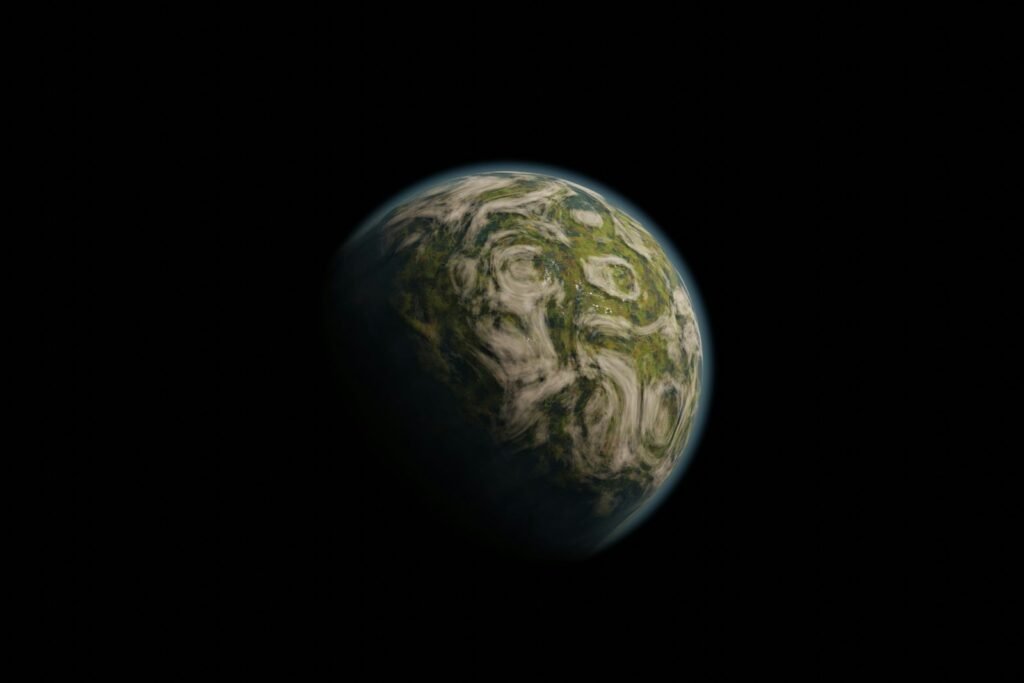
Terraforming Cost Estimator
Calculate what it would take to transform alien worlds into Earth-like habitats
Making New Earths: The Ultimate Engineering Challenge
Terraforming—transforming a planet or moon to support Earth-like life—represents perhaps the grandest engineering project conceivable. Mars, with its thin CO₂ atmosphere and cold temperatures, might be made habitable over centuries. Venus, despite its hellish conditions, could theoretically be cooled and detoxified. Even moons like Europa or Titan present transformation possibilities.
Our Terraforming Cost Estimator calculates the energy, materials, time, and economic resources required to terraform different worlds. While these numbers are speculative, they’re grounded in physics and provide perspective on the monumental scale of planetary engineering.
The Science of Planetary Transformation
Terraforming involves changing a planet’s atmosphere, temperature, water availability, and surface conditions to support life. The journal Icarus has published serious scientific analyses of terraforming Mars and other worlds. Our Exoplanet Habitability Checker explores what makes worlds naturally life-friendly.
Terraforming Cost Estimator
Calculate requirements for transforming different worlds:
🪐 Terraforming Cost Estimator
Calculate the cost and time to make other worlds habitable!
🌍 Choose Your World
Estimate energy needs, timeline, atmospheric changes, and economic scale for terraforming Mars, Venus, the Moon, and more.
Terraforming Mars
Mars is the most discussed terraforming target because it’s relatively accessible and has some favorable conditions:
Current Conditions
- Surface pressure: ~0.6% of Earth (6 mbar vs 1013 mbar)
- Average temperature: -60°C (-76°F)
- Atmosphere: 95% CO₂, minimal oxygen
- Water: Significant ice at poles and underground
- Gravity: 38% of Earth
Terraforming Approaches
Warming the planet: Release greenhouse gases (CFCs, ammonia, or CO₂ from polar caps) to trap solar heat. Orbital mirrors could increase solar input. The NASA analysis suggests Mars lacks enough CO₂ for significant warming without importing volatiles.
Thickening atmosphere: Release volatiles from regolith, import comets/asteroids rich in ammonia and water, or manufacture atmosphere from local materials. Calculate travel requirements with our Mars Commute Calculator.
Creating oxygen: Once warm enough, engineered organisms (cyanobacteria, algae) could begin photosynthesis, converting CO₂ to oxygen over centuries or millennia.
Timeline estimate: 100-1,000+ years for partial terraforming; perhaps 10,000+ years for Earth-like conditions.
Terraforming Venus
Venus presents greater challenges but also greater rewards—it’s similar in size to Earth:
Current Hellscape
- Surface temperature: 465°C (870°F)—hot enough to melt lead
- Surface pressure: 92 atmospheres (like being 1km underwater)
- Atmosphere: 96.5% CO₂, sulfuric acid clouds
- Day length: 243 Earth days (longer than its year)
Transformation Approaches
Giant sunshade: Block solar input to cool the planet. A shade at the Venus-Sun L1 point could reduce insolation. As the planet cools, CO₂ would freeze out.
Remove atmosphere: Mass drivers could launch atmospheric gases to space, or bombardment with hydrogen could convert CO₂ to graphite and water. This requires enormous energy—our Dyson Sphere Calculator explores such energy scales.
Import hydrogen: Combine with CO₂ to create water and carbon. Thousands of comets or asteroids would be needed.
Timeline estimate: Several centuries to cool; thousands of years for biological oxygen production.
Other Terraforming Targets
The Moon
Lacking atmosphere and magnetic field, the Moon would require complete artificial environment creation. Subsurface habitats are more practical than full terraforming. However, its proximity makes it an excellent testbed for terraforming technology.
Titan
Saturn’s moon has a thick nitrogen atmosphere—denser than Earth’s! However, temperatures of -179°C and lakes of liquid methane present unique challenges. Warming Titan could release vast amounts of nitrogen and create an Earth-like pressure. Explore alien environments with our Alien Height Translator.
Europa
Jupiter’s moon likely has a subsurface ocean—potentially already habitable for certain life forms. Creating a surface biosphere would require significant heating and atmospheric creation, but the existing ocean might support life now.
The Economics of Terraforming
Terraforming costs are essentially incalculable in current terms:
Energy requirements: Warming Mars requires ~10²⁴ joules—roughly humanity’s total energy consumption for 10,000 years at current rates. Venus requires even more. Our Fusion Energy Calculator explores future energy sources.
Material transport: Importing volatiles requires moving billions of tons of material across the solar system. Current launch costs of ~$2,000/kg make this absurdly expensive, but future space industry could reduce this dramatically.
Timeline economics: A 1,000-year project defies conventional economic analysis. But if humanity colonizes space, terraforming becomes infrastructure investment for future generations—like building cathedrals or planting forests.
Frequently Asked Questions
Is terraforming actually possible?
Physics doesn’t forbid it—the challenge is engineering and time. We already change planetary atmospheres (Earth’s climate change demonstrates this). Scaling up to deliberate planetary transformation requires technologies we don’t yet have, but there are no fundamental barriers.
Would terraformed Mars have Earth gravity?
No. Mars has 38% Earth gravity, and we can’t change that. Humans might adapt over generations, or genetic engineering could help. Lower gravity means taller, more fragile bone structures—explore this with our Gravity Simulator.
Could we breathe on a terraformed Mars?
Eventually, yes—if we raise oxygen levels and maintain sufficient pressure. This would take centuries or millennia of photosynthetic life converting CO₂. In the interim, people might need only supplemental oxygen rather than full pressure suits.
Why terraform when we can build habitats?
Both approaches have merits. Orbital habitats or domed cities are faster and more controllable. Terraforming creates self-sustaining ecosystems that don’t require continuous maintenance. A spacefaring civilization would likely do both—habitats for immediate expansion, terraforming as a long-term investment.
Explore More Planetary Engineering
Terraforming connects to broader questions about space colonization and engineering. Continue exploring:
- Space Elevator Calculator – Reducing launch costs for space industry
- Star Life Expectancy Calculator – How long will the Sun support terraformed worlds?
- Orbital Speed Calculator – Understand orbital mechanics for material transport
- Interstellar Travel Calculator – Reaching other star systems
- Cosmic Timeline Explorer – Long-term perspective on planetary projects
Terraforming represents humanity’s boldest possible dream: reshaping worlds to expand the domain of life beyond Earth. Whether we begin in decades or centuries, the calculations reveal both the enormity of the challenge and the tantalizing possibility of success.