The Ultimate Guide to Watching Space Events from Earth
Watching space events from Earth is one of the cheapest, most awe-inspiring ways to feel connected to the cosmos. Whether it’s a sudden meteor streaking across the sky, the eerie green curtains of an aurora, a total solar eclipse that plunges your town into twilight, or the ISS sailing silently overhead — you don’t need a PhD or a billion-dollar telescope to join the show. This guide gives you everything you need to plan, spot, photograph, and enjoy space events responsibly and frequently: calendars and apps, what to look for, how to prepare, gear and camera settings, safety rules (serious for solar events), where to go, real-time forecasting resources, pro tips, and an easy checklist so your next skywatch is unforgettable.
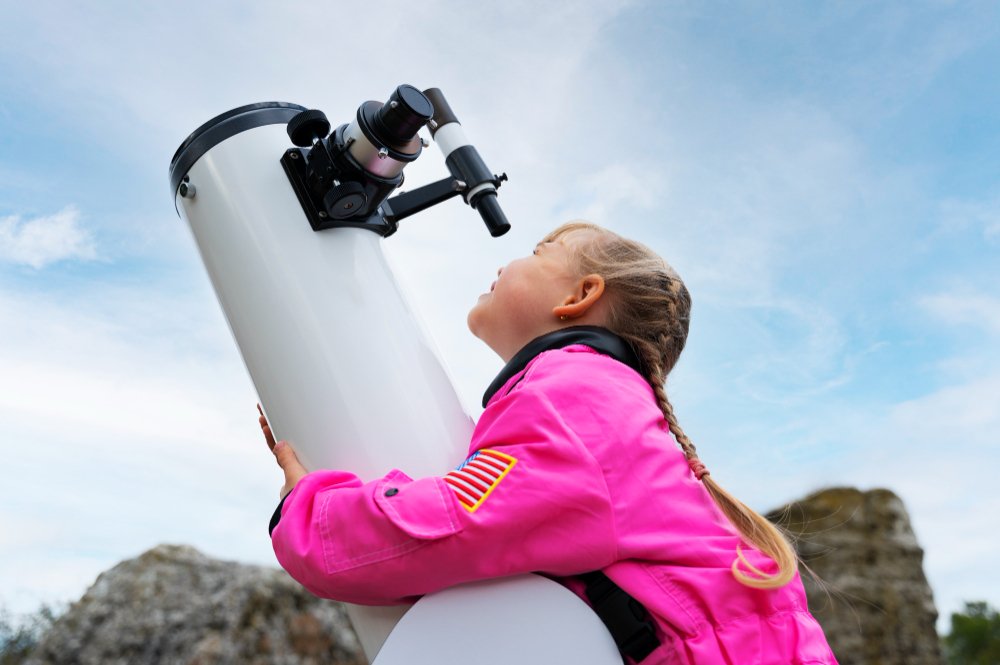
Table of Contents
1 — Why chase space events? (short answer: wonder + learning)
Space events are short, free, and reliably humbling. You get:
- A visceral connection to scale and time.
- Instant science lessons (comets = dirty snowballs; meteors = debris burnt in the atmosphere; aurora = solar particles meeting our magnetosphere).
- Great social occasions: sharing an eclipse or meteor shower with friends is unforgettable.
If you want a starter list: pick one accessible event type (ISS pass, bright planet, or a meteor shower) and go out once this month. You’ll be hooked.
2 — How to plan: calendars, alerts and smart timing
Start with reliable calendars and local alerts — they do the heavy lifting for you.
- Use a global events calendar (planetary oppositions, meteor showers, eclipses) to mark big nights for the year. Timeanddate’s astronomy pages are an excellent central calendar for sighting dates and interactive sky maps. Time and Date
- Subscribe to NASA’s “What’s Up” and daily skywatching pages for monthly tips and highlight events; they’re beginner-friendly and authoritative. NASA Science
- For satellite passes and precise ISS timing use Heavens-Above or NASA’s Spot the Station — they’ll give you pass times, brightness (magnitude), and direction so you know exactly where and when to look. heavens-above.com
Timing tips:
- For meteors, the darkest hours after midnight are usually best (but some showers are best earlier; check the shower’s peak window). Space
- For ISS and many satellites, sightings are typically within 1–2 hours after sunset or before sunrise, when the observer’s location is dark but the spacecraft is still sunlit. NASA
- For aurora, keep an eye on NOAA/Space Weather Prediction Center alerts and be ready to travel north/south a bit if forecasts spike. NOAA Space Weather Prediction Center
3 — The event types and what makes each special
Below are the common space events you’ll encounter and the best way to view them.
Meteor showers
Why they thrill: multiple “shooting stars” per hour when Earth crosses a debris trail. Best approach: lie back, let your eyes adapt, and scan the whole sky. Peak visibility depends on the shower and moon phase. Use Timeanddate/Space.com for peak dates and radiant info. Space
Solar eclipses (partial, annular, total)
Why they awe: daytime darkness and the Sun’s corona in totality. Critical safety note: NEVER look at the Sun without certified solar filters except during totality (and only then when the Sun is completely covered). Use proper eclipse glasses or solar filters. NASA and eclipse maps are your planning source. NASA Science
Lunar eclipses
Why they’re easy: visible from anywhere the Moon is above the horizon and much safer to watch — no filters required. Total lunar eclipses show the Moon turned copper-red by Earth’s atmosphere.
Aurora (Northern/Southern Lights)
Why they glow: charged particles from the Sun exciting the atmosphere — dynamic curtains of color. Forecasts by NOAA SWPC and regional aurora dashboards help you know when to drive north/south. Optimal hours are around local midnight, but strong storms can show earlier. NOAA Space Weather Prediction Center
Planetary oppositions & bright planets
Why they’re steady: Mars, Jupiter, Saturn and Venus become excellent targets when they’re closest. These are great for binoculars and small telescopes.
Comets
Why they’re unpredictable: sometimes spectacular, sometimes faint. If a bright comet appears, check space news and timeanddate for how to find it.
ISS passes, satellite flares & transits
Why they’re accessible: you can predict them to the minute. ISS passes are bright and slow; use Heavens-Above or NASA Spot the Station for times and star charts. heavens-above.com
Occultations & transits (Moon hides a star/planet, or Mercury/Venus crosses the Sun)
Why they’re precise: ephemeral events that thrill sketchers and photographers. Exact timing is critical — use countdown apps and watch the ingress/egress closely.
4 — Gear cheat sheet: what to bring (and what to skip)
You don’t need much. Pick gear to match what you want to see.
Essentials for every outing
- Warm layered clothing, water, snacks, a reclining chair or blanket, and a red-headlamp (red preserves night vision).
- Smartphone with star-chart app or downloaded offline sky map.
- A small notebook for observations (optional but rewarding).
For casual skywatching (naked eye + binoculars)
- 7×50 or 10×50 binoculars: cheap, lightweight, and great for comets, star clusters, lunar detail, and planets.
- Comfortable camp chair or blanket for long sessions.
For photography and long exposures
- Sturdy tripod (non-negotiable).
- DSLR/mirrorless camera or modern smartphone with a night-mode app.
- Wide-angle lens (f/2.8 or faster ideal) for meteors and Milky Way shots.
- Intervalometer or built-in interval timer for continuous meteor captures.
For amateur astronomy (telescopes)
- A 4–6″ Dobsonian is the best “first telescope” — simple, big aperture for the price.
- An equatorial mount with a tracking motor helps long-exposure astrophotography.
- Beware: telescopes are not great for wide-field meteor shower photos — use binoculars or wide-field camera lenses instead.
For solar viewing
- ISO-certified solar eclipse glasses (never improvise).
- If using optics (binoculars/telescope), attach a certified solar filter over the front aperture (never over the eyepiece).
- Pinhole projector is a safe, low-tech way to watch solar eclipses.
5 — How to photograph space events (practical camera setups)
Different events demand different approaches.
Meteor shower (wide-field)
- Camera: DSLR or mirrorless, wide lens 14–35mm at f/2.8–f/4.
- Settings: ISO 1600–6400 (depending on sensor), exposure 10–30s (avoid star trails for shorter exposures), manual focus to infinity.
- Strategy: point roughly 45° from the radiant; use continuous exposures (intervalometer) for 1–3 hours. Stack later to combine sky and meteors.
Aurora
- Lens: wide-angle 14–35mm, f/2–f/2.8.
- Settings: ISO 800–3200, exposure 2–10s (faster exposures for fast-moving aurora), manual focus.
- Tip: If colors look off, shoot RAW and adjust white balance later.
ISS transit across Sun/Moon (very fast event!)
- Plan: use Heavens-Above and an app to time the transit to the second.
- Gear: telescope with tracking mount + camera adapter or telephoto lens (600mm+).
- Settings: very short exposures to freeze motion (1/1000s+ for sunlight transit). Pre-focus on the Sun/Moon and brace the mount.
Solar eclipse (partial & total)
- Partial phases: use solar filter on optics; exposures vary: bracket from 1/1000s to 1/4s depending on filter and aperture.
- Totality: remove filter only during totality; use wider exposures to capture corona (start with 1/125s, 1/30s, 1/8s, 1/2s). Practice before the event.
Lunar eclipse
- Use a telephoto or small telescope; exposures change as the Moon darkens — bracket systematically (1/250s → 1s).
6 — Safety & responsibility (look after eyes, gear and planet)
A few non-negotiable safety rules:
- Never look at the Sun without ISO-certified eclipse glasses or a certified solar filter over any optical device. Permanent eye damage can occur in seconds. (NASA and eclipse guides emphasize this repeatedly.) NASA Science
- Dress for the weather and bring hydration — long nights can be colder than you expect.
- Respect private property and local rules if you travel to a dark-sky site.
- If driving to a remote site late at night, share your plan with someone and carry a power bank, map, and warm blanket.
7 — Real-time forecasting & live resources (the ones to bookmark)
These are indispensable when you need up-to-the-minute info:
- NASA Skywatching / What’s Up — monthly guides and safety for eclipses and general events. NASA Science
- Heavens-Above — satellite passes, ISS predictions, star charts for your location. heavens-above.com
- Timeanddate Astronomy — calendar, interactive sky maps, meteor shower pages and event times. Time and Date
- Space.com — great how-to guides and meteor-shower coverage. Space
- NOAA Space Weather Prediction Center (SWPC) — aurora forecasts, alerts, and 30-minute maps. Bookmark the aurora dashboard before heading out. NOAA Space Weather Prediction Center
Apps to consider (table below) include Stellarium, SkySafari, PhotoPills (for photographers), and dedicated aurora and ISS alert apps — see the tools table near the end.
8 — Where to watch: choosing the right location
Your viewing location is often the single biggest multiplier of enjoyment.
- Dark-sky parks and reserves: fewer stars are lost to light pollution — the Milky Way pops. Use dark-site maps (e.g., DarkSiteFinder or local dark-sky parks).
- Open horizons: for meteor showers and low-elevation aurora, you want an unobstructed view to the horizon.
- For eclipses: check the centerline maps well in advance and choose a site with good historical weather odds (eclipse weather maps help).
- Local planetariums and astronomy clubs: they host public viewing events (telescopes, expert guides) and are great for beginners.
If you can only step into a backyard, you’ll still see the brighter events (bright planets, ISS). For the Milky Way or dim comets, plan a short drive to darker skies.
9 — Etiquette and accessibility (be a good skywatcher)
- No bright white lights — use red headlamps only. Bright lights ruin other people’s night adaptation and your own.
- Give people space — telescopes and tripods need room; don’t crowd someone’s eyepiece.
- Be patient and inclusive — explain briefly if asked; novices love a friendly guide.
- Accessibility: set up low-viewing stations, large-font handouts, and bring portable seats for older or less-mobile viewers; audio descriptions help visually impaired guests.
10 — Pro tips, troubleshooting & the quick checklist
Pro tips:
- Let your eyes adapt 20–30 minutes for deep-sky viewing — no bright screens.
- When photographing meteors, aim the camera away from the radiant (45°) to capture longer trails.
- Warm batteries in a pocket; cold reduces capacity.
- For aurora, shoot RAW and underexpose slightly to keep colors saturated.
- Practice your eclipse sequence at home with test shots so you know how to swap filters quickly.
Printable quick checklist (take with you)
- Layers of clothing + hat + gloves
- Red headlamp + spare batteries
- Star chart app + offline map for location
- Binoculars (7×50), tripod, camera + wide lens, intervalometer
- Chair/blanket + thermos + snacks
- Certified solar glasses and solar filter (if eclipse)
- First-aid kit + mobile power bank
- Printed schedule/times for event + backup plan for weather
Tools & apps: recommended table
| Tool / App | Best for | Quick note |
|---|---|---|
| NASA Skywatching / What’s Up | Monthly picks, eclipse safety | Beginner-friendly guides. NASA Science |
| Heavens-Above | ISS & satellite passes | Precise pass times & sky charts. heavens-above.com |
| Timeanddate Astronomy | Event calendar, meteor showers | Interactive sky maps & peak times. Time and Date |
| Space.com | How-to guides, meteor coverage | Good background articles for events. Space |
| NOAA SWPC / Aurora Dashboard | Aurora forecasts | Real-time maps & 30-minute forecasts. NOAA Space Weather Prediction Center |
| Stellarium / SkySafari | Live sky maps, planetarium view | Excellent for planning and star-hopping |
| PhotoPills / PCalc | Photographer planning | Sun/moon rise, transit timing & exposure planning |
| Local astronomy club sites | Community events & loaner scopes | Great for beginners and social viewing |
FAQs (8)
Q1 — How long do I have to wait to see something worth watching?
You can see bright planets and the ISS in a single evening; meteor showers and auroras require patience or the right forecast. For great deep-sky views you may need to travel to dark skies.
Q2 — Can I photograph meteors with a smartphone?
Modern smartphones with night mode can capture bright meteors and scenes, but a camera with manual control and a wide lens is far more reliable for meteor stacks and low-noise images.
Q3 — Is an eclipse safe to watch with sunglasses?
No. Regular sunglasses do not block enough solar radiation. Only ISO-certified eclipse glasses or proper solar filters are safe. NASA Science
Q4 — How do I know if the ISS will pass over my city?
Use Heavens-Above or NASA Spot the Station and enter your location — they’ll give pass times, direction and magnitude. heavens-above.com
Q5 — What’s the best meteor shower for beginners?
The Perseids (August) and Geminids (December) are reliably strong and beginner-friendly — check moon phase and weather. Space
Q6 — How far should I travel to see aurora?
Aurora visibility depends on geomagnetic activity. NOAA SWPC’s forecast and viewline maps help you know whether you need to travel hundreds of kilometers or just to a nearby dark spot. NOAA Space Weather Prediction Center
Q7 — Are there private companies that livestream events if I can’t go?
Yes — planetariums, observatories and science media outlets often livestream eclipses, comet views and rare events. Check NASA and major observatory websites.
Q8 — What’s the biggest rookie mistake?
Forgetting weather and moon phase. A full Moon or clouds will kill many events — always check local weather and moonlight before you set up.