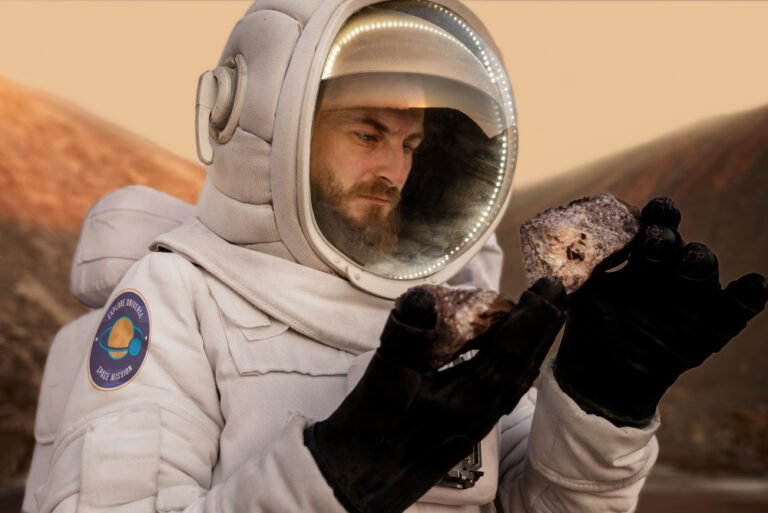
9 Everyday Jobs People Might Do on Mars by 2050
By 2050, a living, working human presence on Mars could look less like a single heroic mission and more like a tiny, high-tech town with daily rhythms, local economies, and—yes—jobs you’d clock into every morning. Jobs on Mars will blend familiar occupations (plumbers, medics, teachers) with roles that barely exist today (regolith agronomist, cryo-propellant technician). This article paints a realistic, practical picture of 9 everyday jobs Mars settlers will likely do by mid-century: what they involve, why Mars needs them, the tools and skills required, how communities might organize work, likely daily routines, and tips for people today who want to prepare. Expect practical detail, an info table for quick comparison, useful tips & tricks, entertainment/quality-of-life notes, and FAQs that answer the most common “how would that actually work?” questions.

Table of Contents
Everyday Jobs: Why think about jobs now?
Planning for jobs on Mars isn’t fanciful hiring — it’s mission design. Every role you fund or train for addresses a real need: keeping habitats breathable, producing food, extracting water, maintaining vehicles, educating the next generation, and preventing catastrophic failures. Early colonies will be small and lean; every person will likely wear multiple hats. Thinking through job definitions now helps design training pipelines, robots vs humans trade-offs, and resilient organizational structures so that a Martian outpost becomes sustainable rather than merely surviving.
1) Regolith Agronomist (Mars Farmer)
What it is: Growing edible crops using hydroponics, aeroponics, or regolith-amended systems; optimizing yield, nutrient cycles, and closed-loop water reuse. On Mars this is half farming, half bioreactor management.
Why Mars needs it: Fresh food provides nutrition and morale, reduces resupply dependency, and contributes to air/water recycling.
Typical day
- Morning plant health inspection (visual, camera logs, nutrient sensor checks).
- Adjust nutrient mixes and pH based on automated sensor feed.
- Harvest microgreens/leafy greens for meals; package and catalog yields.
- Run sterilization cycles and composting loops (human waste ↔ regolith amendment pipelines).
- Troubleshoot LED arrays, pumps, and airflows with Habitat Systems Engineer.
Required skills
- Plant physiology, controlled-environment agriculture, microbiology basics.
- Systems thinking for closed-loop life-support.
- Hands-on mechanical skills for pumps, valves, and lights.
- Good hygiene/biosecurity discipline.
Tools & tech
- Hydroponic trays, aeroponic misters, nutrient dosing systems, LED fixture arrays, sensors (EC, pH, dissolved O₂), small analytical kits for microbes.
- Compact growth chambers / modular racks designed for robotic harvesting.
Crew size in a 20-person base: 1–3 dedicated agronomists + cross-trained crew support.
How to prepare on Earth
- Study controlled-environment agriculture, volunteer at vertical farms.
- Learn lab basics (sterile technique, culturing), and take short courses in hydroponics.
- Practice automated control systems (Arduino/PLC) to monitor plant growth cycles.
Tip & trick: Start with fast, robust crops (microgreens, lettuce, herbs, dwarf wheat) and design “comfort food” rotations (spices, tomatoes if feasible) to maximize morale.
2) Cryo-Propellant Technician (ISRU Propellant Operator)
What it is: Operates in-situ resource utilization plants that extract water, electrolyze it into H₂/O₂, liquefy and store cryogenic propellant for ascent stages and orbital depots.
Why Mars needs it: Importing propellant from Earth is prohibitively expensive at scale; producing it on Mars enables return trips, mobility, and a local logistics economy.
Typical day
- Monitor cryo-plant telemetry (temperatures, pressures, power draw).
- Cycle cryo-coolers and manage boil-off; perform tank fills for local tugs or ascent vehicles.
- Run maintenance on compressors, vacuum jackets, valves; diagnose leaks.
- Coordinate with Logistics & Rover teams to move feedstock (ice/regolith) and with Habitat Systems for power scheduling.
Required skills
- Chemical / mechanical engineering background, cryogenics experience, experience with electrolysis systems.
- Strong safety culture (H₂/O₂ hazards).
- Familiarity with vacuum systems and thermal management.
Tools & tech
- Electrolyzers, cryo-coolers, insulated storage tanks, turbomachinery, leak detectors, vacuum pumps.
- Remote monitoring dashboards and hardwired manual override controls.
Crew size in a 20-person base: 2 technicians (primary + backup) with remote support.
How to prepare on Earth
- Work in cryogenics, chemical plant operations, or rocket propulsion test facilities.
- Training in hazardous gas handling, confined-space rescue, and industrial automation.
Tip & trick: Emphasize redundancy — multiple smaller tanks and parallel compressors are safer than one giant system. Keep simple mechanical bypasses for emergency venting.
3) Suit Systems Technician (EVA & Life-support Mechanic)
What it is: Maintains, inspects, repairs, and certifies Extravehicular Activity (EVA) suits and portable life-support systems; preps suits for sorties and refits them after dust exposure.
Why Mars needs it: EVA is how people build, repair, and explore; suits are mission-critical, complex hardware that must be serviced frequently.
Typical day
- Pre-EVA suit checks: seals, suit pressure tests, battery and oxygen checks.
- Post-EVA decon: dust removal, seal inspection, small repairs (patches, glove replacements).
- Scheduled deep maintenance: actuator checks, sensor replacement, firmware updates.
- Inventory management for consumables (filters, O-ring kits).
Required skills
- Mechanical and electronics repair skills, contamination control, materials science knowledge (polymer fatigue, seal behavior).
- Ability to perform precision assembly while wearing dexterous gloves (practice with gloved tasks is common).
Tools & tech
- Pressure test rigs, glovebox repair stations, dust-vacuuming gear, UV sterilizers, adhesives rated for vacuum.
- Spare parts inventory indexed and barcoded for quick swap.
Crew size in a 20-person base: 1 full-time technician + others trained as backups.
How to prepare on Earth
- Military/industrial suit maintenance, SCUBA equipment tech work, aerospace maintenance certifications (A&P), plus training in contamination control.
Tip & trick: Create simple “suit repair kits” that astronauts can use in the field for quick fixes; design gloves and joints for modular replacement.
4) Habitat Systems Engineer (HVAC, Water, Power)
What it is: Oversees the habitat life-support triangle: air revitalization, water reclamation, thermal control, and primary power systems (solar arrays, batteries or small reactors).
Why Mars needs it: Habitats must remain habitable 24/7; maintaining environmental control is a continuous, high-responsibility job.
Typical day
- Review overnight alarms and telemetry (CO₂, trace contaminants, humidity).
- Perform preventative maintenance on pumps, heaters, radiators and power converters.
- Schedule routine filter swaps, membrane cleanings, and sensor calibrations.
- Coordinate with supply and logistics for spare parts and with medical on air-quality concerns.
Required skills
- Mechanical/chemical/electrical engineering; controls; experience with HVAC-like systems and water reclamation (membrane tech).
- Strong troubleshooting and familiarity with cross-disciplinary systems.
Tools & tech
- Remote monitoring dashboards, spare cartridges, filter banks, sensor calibration tools, and redundancy hardware.
Crew size in a 20-person base: 1–2 engineers/technicians with rotational on-call shifts.
How to prepare on Earth
- Work in industrial HVAC, water treatment plants, spacecraft systems engineering, or nuclear plant operations.
- Acquire control-systems and SCADA experience.
Tip & trick: Maintain “paperwork as real-time aid”—clear checklists for swap procedures reduce errors under stress.
5) Rover & Logistics Operator (Ground Transport Manager)
What it is: Controls rover fleets (cargo, scouting, construction), manages supply caches, and plans surface transport routes using teleoperation and supervised autonomy.
Why Mars needs it: Moving materials, people, and samples safely and efficiently is fundamental when roads don’t exist and every traverse costs energy.
Typical day
- Plan deliveries between base, ISRU plant, and scientific sites.
- Schedule rover charge cycles and maintenance checks.
- Teleoperate complex traverses; intervene when autonomy stalls.
- Coordinate with mission planners and cryo-prop technicians on timing and payload manifests.
Required skills
- Robotics, remote-systems operation, mission planning, geospatial awareness.
- Proficiency with autonomy frameworks and manual override.
Tools & tech
- Rover teleop consoles, satellite/relay comm windows, LIDAR and terrain mapping lidar/photogrammetry, preventive maintenance toolkits.
Crew size in a 20-person base: 1–3 operators, more when a construction or science campaign is running.
How to prepare on Earth
- Work in mining autonomous fleets, planetary rover ops, heavy equipment operation, or logistics and supply-chain coordination.
Tip & trick: Maintain charging hubs and spare batteries at waypoints; standardize payload pallets for faster loading/unloading.
6) Medical Officer / Telemedicine Specialist
What it is: Provides primary medical care, emergency surgery stabilization, preventive medicine, and coordinates with Earth-based specialists via delayed telemedicine.
Why Mars needs it: Distance and communication delay make onboard medical expertise essential; timely triage and stabilization save lives.
Typical day
- Routine health checks, exercise regimen oversight, mental health check-ins.
- Maintain medical inventory and run diagnostics (ultrasound, point-of-care blood analyzers).
- Participate in simulations for trauma, radiation exposure response, and infectious disease containment.
Required skills
- General practitioner or paramedic background with trauma training; additional training in space physiology and isolation medicine.
- Telemedicine operations, diagnostic imaging, and small surgical procedure competence.
Tools & tech
- Portable ultrasound, diagnostic kits, trauma kits, telemedicine video link, and a medical decision-support database.
Crew size in a 20-person base: 1 primary medical officer + telemedicine network to earth specialists.
How to prepare on Earth
- Emergency medicine, aerospace medicine fellowships, wilderness medicine, and training in remote diagnostics.
Tip & trick: Implement robust preventative programs (exercise, nutrition, sleep hygiene) — prevention reduces emergency load substantially.
7) Remote Ops & Robotics Supervisor (Robot Fleet Manager)
What it is: Oversees construction robots, inspection drones, and manufacturing cells; programs autonomy routines and supervises complex assembly operations.
Why Mars needs it: Robots will build before humans arrive and remain essential for heavy-lift, repetitive, and hazardous tasks.
Typical day
- Review production queues, validate autonomy runs, troubleshoot robot health (motors, actuators, sensors).
- Update task queues from mission planners.
- Coordinate with Rover & Logistics and Habitat Systems Engineers to integrate robotic tasks.
Required skills
- Robotics engineering, autonomy frameworks, AI supervision, systems integration, coding and field repair.
Tools & tech
- Robot control interfaces, simulation sandboxes, spare actuators, and diagnostic rigs.
Crew size in a 20-person base: 1–3 robotics supervisors, scalable during construction phases.
How to prepare on Earth
- Robotics research or industry, ROS (Robot Operating System) knowledge, and experience in industrial automation.
Tip & trick: Keep a small “quick-swap” parts cache; field replacements are routine and mission-critical.
8) Community Resilience Officer (safety, psychological welfare, governance)
What it is: A hybrid role combining safety officer, counselor, and community mediator; designs protocols, runs safety drills, supports mental health initiatives, and helps craft local governance.
Why Mars needs it: Small groups in isolated, high-risk environments need structured social practices to prevent conflict, panic, and burnout.
Typical day
- Run emergency drills (airlock breach, fire, radiation event).
- Facilitate community meetings, conflict resolution sessions, and recreation planning.
- Monitor group dynamics and individual mental health flags.
Required skills
- Background in emergency management, counseling/psychology, organizational behavior, and mediation.
Tools & tech
- Simulation platforms for training, communication systems for privacy and community announcements, mental-health tele-support ropes to Earth clinicians.
Crew size in a 20-person base: 1 appointed officer (often double-hatted with another role), plus peer-support network.
How to prepare on Earth
- Emergency response training, psychology courses, and study of small-group dynamics in isolated environments (polar stations, submarines).
Tip & trick: Rituals and scheduled social events (movie nights, cooking days) are low-cost, high-return investments in cohesion.
9) Educator / Skills Trainer (multi-age teacher & apprenticeship lead)
What it is: Teaches children (if families exist) and trains new crew members—practical apprenticeship on systems, robotics, and emergency skills. Education on Mars blends formal schooling with hands-on technical training.
Why Mars needs it: Skills retention and cultural continuity matter. If colonies plan for growth, building learning pathways and apprenticeships is essential.
Typical day
- Morning lessons (math, science, language) or training modules.
- Hands-on labs: maintaining water systems, suit practice, rover driving practice.
- Curriculum development for remote & blended learning, plus psychological and social development work.
Required skills
- Teaching credentials combined with technical literacy (STEM), plus experience in adaptive pedagogy for small, mixed-age groups.
Tools & tech
- AR/VR teaching aids, remote lectures, hands-on kits, and compact lab setups.
Crew size in a 20-person base: 1 teacher/trainer, possibly rotating responsibilities.
How to prepare on Earth
- Teacher training plus technical certificates; develop experience in multi-age classrooms and immersive learning tech.
Tip & trick: Use project-based learning centered on mission tasks—kids can help with low-risk monitoring, contributing to purpose.
Comparative info table: quick at-a-glance
| Job | Core function | Needed skills | Tools/tech | Typical crew (20-person base) |
|---|---|---|---|---|
| Regolith Agronomist | Grow food & recycle nutrients | CEA, microbiology, automation | Hydroponics, sensors, LEDs | 1–3 |
| Cryo-Propellant Tech | Produce & store propellant | Cryogenics, chemical eng | Electrolyzers, cryo-tanks | 2 |
| Suit Technician | Maintain EVA suits | Mechanical/electronic repair | Pressure rigs, patch kits | 1 |
| Habitat Systems Eng. | Air/water/power systems | HVAC, water treatment | Pumps, membranes, batteries | 1–2 |
| Rover/Logistics Ops | Move cargo & people | Robotics, logistics | Rovers, teleop consoles | 1–3 |
| Medical Officer | Healthcare & telemedicine | Emergency medicine | Ultrasound, diagnostics | 1 |
| Robotics Supervisor | Manage robot fleets | Robotics, AI | Robots, simulation tools | 1–3 |
| Community Resilience | Safety & psychosocial health | Counseling, emergency mgmt | Training sims | 1 (double-hat) |
| Educator/Trainer | Teach & upskill | Pedagogy + technical | AR/VR kits, curricula | 1 |
How work schedules & economies might look
- Multi-hatting: Almost everyone takes on two or more roles early on: e.g., an agronomist might be a medic’s assistant and a teacher on weekends.
- Shift rhythm: Critical systems (life-support, cryo-tanks) require 24/7 monitoring — expect rotating 8–12 hour shifts with scheduled maintenance windows.
- Pay & incentives: Early settlers likely combine institutional pay, mission stipends, and equity in future enterprises (if private). Non-financial incentives — priority evacuation, family reunification allowances, and long-term land/claim options — may matter more early on.
- Automation balance: Routine, dangerous, or repetitive tasks will trend toward robotic automation; human roles concentrate on oversight, anomaly resolution, and high-level decision making.
Entertainment, culture, and “office” life on Mars
Jobs aren’t just work — they structure daily life. A Mars town will invent rituals around shift changes, harvest days, rover convoy festivals, and mid-week movie nights. Workspaces will be compact but multi-purpose: labs double as classrooms; agricultural bays transform into communal green rooms. Keeping jobs human-centered makes the difference between a functioning outpost and a stressed, failing one.
Tips for people who want these jobs on Earth
- Start interdisciplinary: Combine a core technical degree (engineering, biology, medicine) with hands-on, field skills (equipment repair, robotics).
- Get analog experience: Spend time in remote-station programs, submarine rotations, Antarctic stations, or offshore rigs. They simulate isolation, logistics constraints, and multi-role expectations.
- Learn automation & coding: Familiarity with control systems, ROS, PLCs, or data dashboards is increasingly vital.
- Train safety-first: Certificates in hazardous-materials handling, confined-space rescue, and emergency medicine elevate your value.
- Practice teamwork & conflict resolution: In small teams, social skills matter as much as technical chops.
FAQs (8)
Q1 — Will most jobs be automated by 2050?
No — automation will handle many repetitive, dangerous, or heavy tasks, but humans will remain essential for anomaly resolution, creative problem solving, maintenance, and social leadership. Early colonies especially rely on human adaptability.
Q2 — How many people are needed before these jobs exist full-time?
A small base (10–20 people) needs most of these roles, but many will be multi-hatted. Full-time specialization becomes practical as population grows into the hundreds.
Q3 — Will civilians hold these jobs or only astronauts/engineers?
Likely both. Over time, as commercial models mature, civilian specialists (farmers turned agronomists, industrial technicians) will work on Mars alongside mission-trained astronauts.
Q4 — How different is medical care on Mars?
It’s constrained by supplies and evacuation timelines. Medical Officers will rely heavily on telemedicine, point-of-care diagnostics, and modular care protocols; prevention is a major job component.
Q5 — What about child care and schooling?
Educators will combine remote curricula with hands-on apprenticeships. Childcare will be a community task — an official job or shared duty — to ensure safety and social development.
Q6 — Are there “office politics” on Mars?
Yes, but smaller scale. Governance structures and clear roles reduce friction. Community Resilience Officers and agreed-on charters will help.
Q7 — How will these jobs pay?
Early compensation models mix mission stipends, agency salary, and private firm contracts. Long-term pay likely normalizes with Earth-market differentials for remote/harsh postings.
Q8 — How to get certified for Mars work?
Expect specialized mission certifications: EVA servicing certs, cryo-op licenses, habitat systems operator certificates — many will be created by agencies and private firms in the next decade.
Conclusion — Jobs make a colony normal
By 2050, jobs on Mars will be the practical scaffolding that turns a sortie into a settlement. The roles above are both narrowly technical and profoundly social: farmers who manage life cycles, technicians who tame cryogenic propellant, medics who treat with delayed help from Earth, and educators who raise the next generation of Martians. Early outposts will be lean, everyone multi-skilled, and robots ubiquitous; but the human element — judgement, care, teaching, creativity — remains irreplaceable. If you want to be part of that future, invest in cross-disciplinary skills, field experience in remote environments, automation literacy, and the interpersonal tools that make small communities thrive. Mars will need technicians, yes — but just as much, it will need people who can build and sustain society, one job at a time.